Mountain Bluebird · Reclaimed Wood
First Chair Ski Patrol
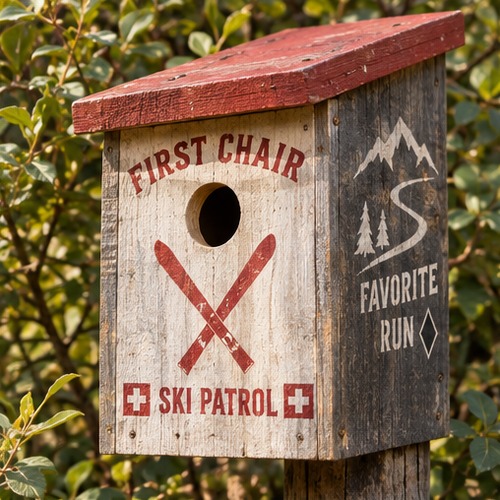
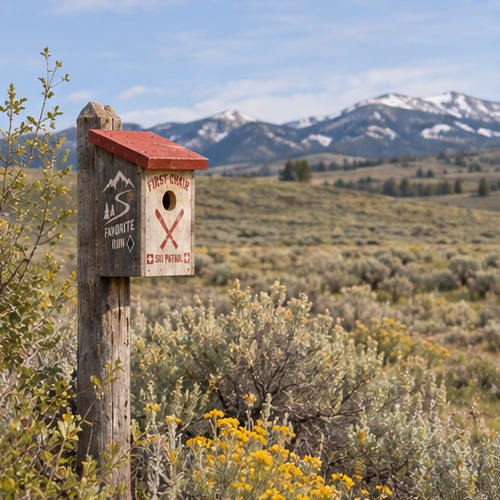
Two crossed skis are painted against the little hut rather than propped against its side.
The Birdhouse
First Tracks
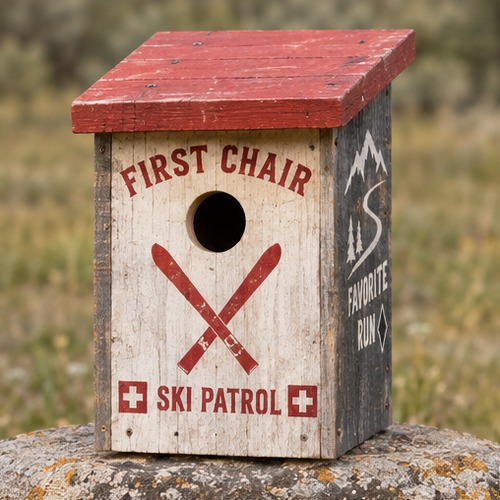
Two crossed skis are painted against the little hut rather than propped against its side. Their diagonal lines distinguish the patrol station from a plain cabin. The run name adds the mountain that matters to the skier who will see it every morning.
Imagine seeing it first from a kitchen window, then from a few steps away. At the window it is the outline you notice. Up close, the painted detail catches the eye and the grain shows why the same pattern can look a little different on each piece of reclaimed wood. Both views are part of the character of a handmade house. Underneath that familiar outline, the form is a cavity nest box intended for the Mountain Bluebird.
The Intended Bird
Meet the Mountain Bluebird
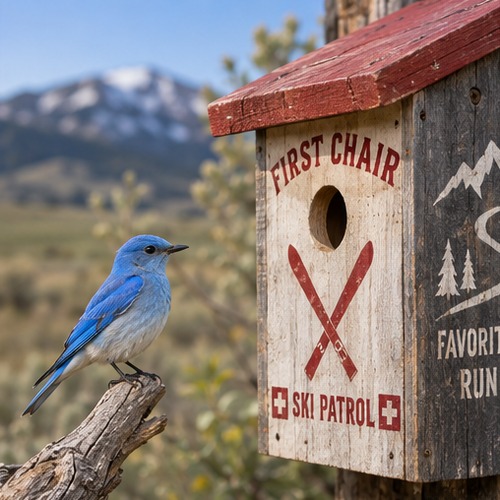
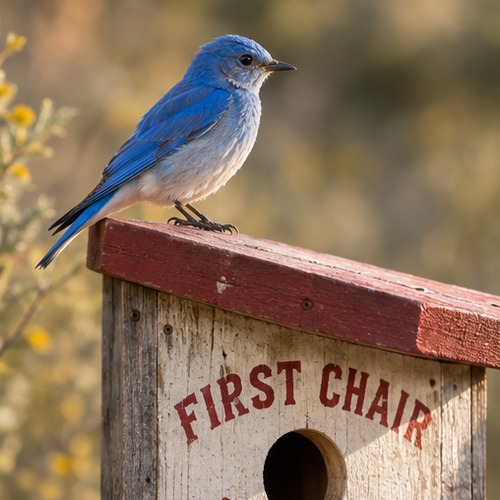
A breeding male can look almost entirely sky blue; females wear softer gray-brown with hints of blue. Watch for a bird hovering over open ground before dropping on insect prey. This bluebird looks for an existing cavity near open hunting ground. The bird’s long approach across a meadow is as much a part of the design decision as the chamber behind the entrance.
An adult needs to enter with nest material, turn inside and leave again with a clear flight path. That sequence explains the simple face of this design. The paint gives people something to recognize from a distance while the actual chamber gives the bird a sheltered space. When choosing a site, picture the journey from a nearby perch all the way to the opening, including the last few feet.
The Landscape
Range and Nesting Habitat
Where might you see the Mountain Bluebird? In open western North America, from northern breeding areas into mountain meadows and high plains, with many moving to lower or more southerly places in winter. Choose open country within the breeding range, with a clear approach and short or patchy vegetation. A ski theme can fit a mountain home even when only a nearby open meadow fits the bird.
The useful question is where this bird spends its nesting season. A dot on a year-round sightings map could represent a migrant stopping for a day. Compare the breeding range with summer observations from a nearby park or natural area. Then walk your own grounds and look for the same pattern of food, cover and open approach before selecting the final spot.
The Handmade Detail
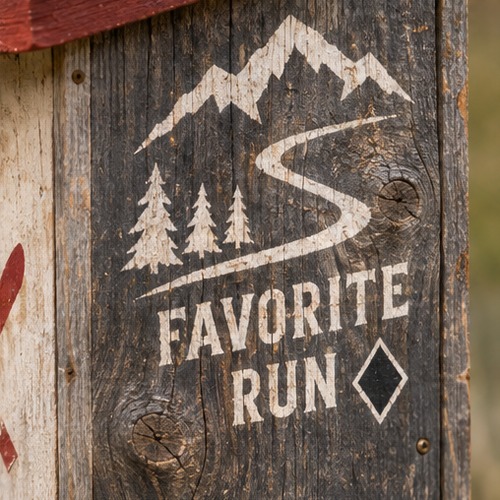
Which run should go on the ski hut?
Choose a run that tells a story, from a first green trail to a favorite powder descent. Check whether the resort writes it as one word or two, especially if the name goes back several generations.
When discussing First Chair Ski Patrol with the workshop, describe the part of the design that first caught your eye. A quick sketch or a reference photograph can say more than a long list of changes. Think about how the piece will look in summer leaves as well as against bare branches. The grain of reclaimed wood varies from board to board, so a painted line can pick up a different texture on the finished house. Keep the entrance, the roof edge and access for seasonal care clear of any requested embellishment.
Field Notes
Watching the House Through the Season
Watch from a distance long enough to see whether a hovering bird returns regularly to the same area. Winter bluebirds crossing a field are a different signal from a pair inspecting a cavity in spring.
A notebook can be as useful as a camera. Sketch the route from a favorite perch, record whether one bird or two appeared, and note the first day you saw nesting material. These details are easy to miss when trying to fill the frame. Compare the notes later with the nesting calendar for your own area. For First Chair Ski Patrol, plan for an unobstructed view from a comfortable distance and leave the entrance quiet whenever birds are using it. Use the linked NestWatch guide to plan checks appropriate to the Mountain Bluebird.