Prothonotary Warbler · Reclaimed Wood
The Bayou Bungalow
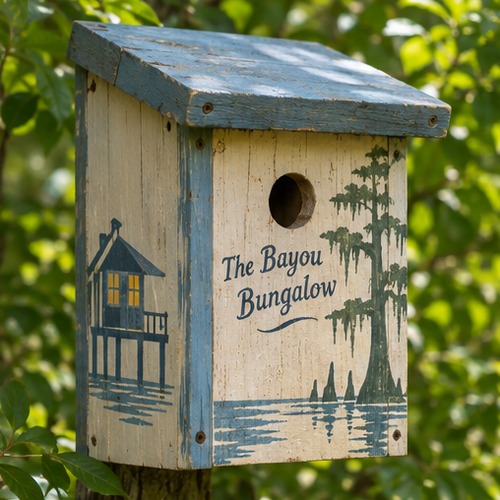
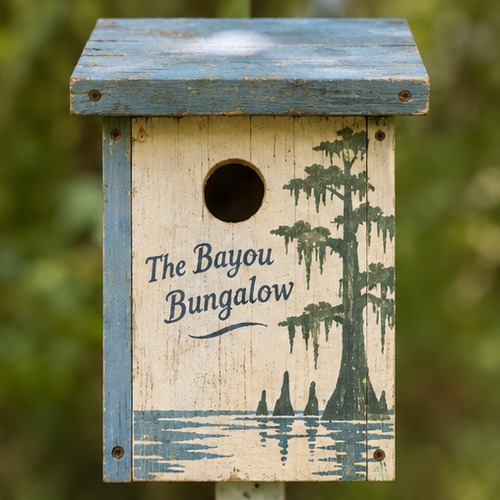
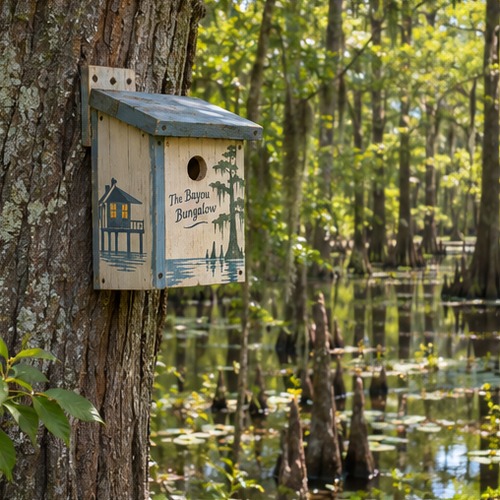
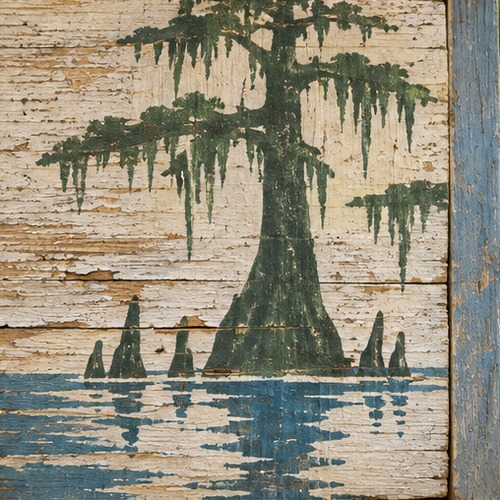
Dark cypress silhouettes rise along the side of a pale fishing cottage.
The Birdhouse
A Cabin on the Bayou
Dark cypress silhouettes rise along the side of a pale fishing cottage. The contrast makes the trees readable from the bank while leaving space for a bayou name. In the right habitat the yellow of a visiting warbler would be the brightest color in the whole scene.
Stand back until the smaller lettering disappears. The outline and the broad blocks of color still tell you what you are looking at. Move closer and the brushwork and grain become visible. Reclaimed boards bring their own small variations in tone, so two versions of the same design can have a different surface under the paint. Underneath that familiar outline, the form is a cavity nest box intended for the Prothonotary Warbler.
The Intended Bird
Meet the Prothonotary Warbler
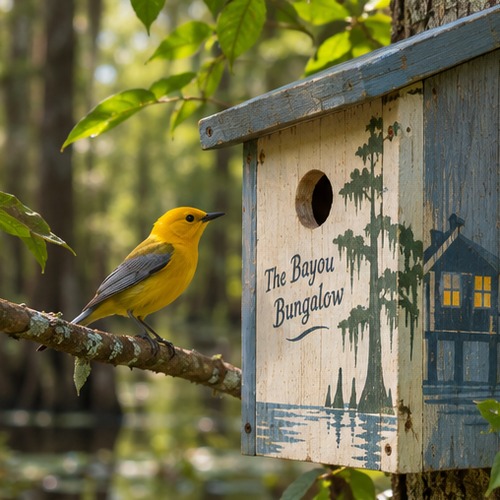
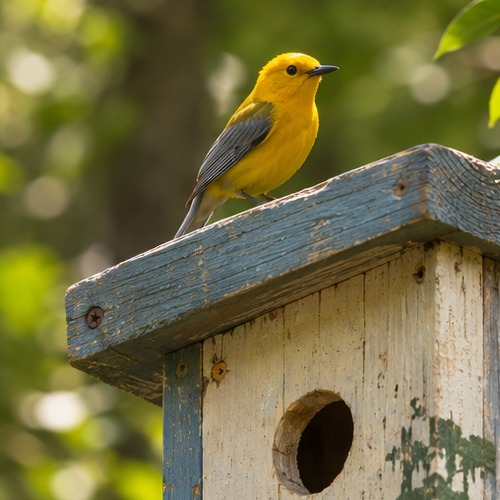
A brilliant yellow head and breast contrast with blue-gray wings. Listen for a ringing series of notes around shaded water and look for movement low among branches near the bank. This is one of the few North American warblers that regularly nests in cavities. A modest enclosed chamber belongs beside a wet woodland, where the bird can find food and protected cover.
An adult needs to enter with nest material, turn inside and leave again with a clear flight path. That sequence explains the simple face of this design. The paint gives people something to recognize from a distance while the actual chamber gives the bird a sheltered space. When choosing a site, picture the journey from a nearby perch all the way to the opening, including the last few feet.
The Landscape
Range and Nesting Habitat
Where might you see the Prothonotary Warbler? Primarily in eastern North American bottomland forests during breeding, especially in the Southeast and river valleys. It migrates south to tropical wintering grounds. A flooded forest, quiet slough or wooded wetland is the starting point. Consider seasonal changes in water level and arrange safe maintenance access before installing anything over or near water.
Check a breeding-season map before choosing a mounting point. A bird seen on a winter walk or during migration may spend the nesting months hundreds of miles away. Look at recent local observations from late spring or summer and compare the habitat around those sightings with your own property. The match becomes more convincing when both the season and the landscape line up.
The Handmade Detail
Which bayou name feels like home?
Choose a slough, bayou or stretch of river that means something to the recipient. A familiar local spelling can matter more than an official map label, so confirm the name before it goes on the cottage.
Before settling on the final look of The Bayou Bungalow, try writing the most important detail on a piece of paper at roughly the size you expect to see. Step back to the distance of your garden chair. Notice what you can still read and which colors disappear against the background. A photograph of the proposed spot helps when discussing the piece with the maker. Allow for differences in the reclaimed boards, especially where a dark grain line crosses a light painted area.
Field Notes
Watching the House Through the Season
Look for flashes of yellow reflected in still water as the bird works along low branches. A decorative bayou name can mark the house, but it is the wooded wetland that gives the idea ecological meaning.
A notebook can be as useful as a camera. Sketch the route from a favorite perch, record whether one bird or two appeared, and note the first day you saw nesting material. These details are easy to miss when trying to fill the frame. Compare the notes later with the nesting calendar for your own area. For The Bayou Bungalow, plan for an unobstructed view from a comfortable distance and leave the entrance quiet whenever birds are using it. Use the linked NestWatch guide to plan checks appropriate to the Prothonotary Warbler.