White-breasted Nuthatch · Reclaimed Wood
The Corner Post Office
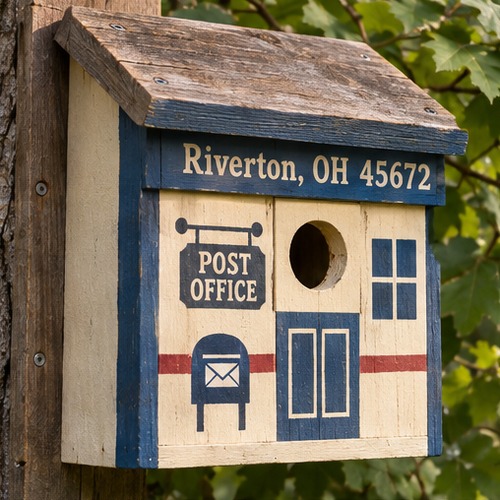
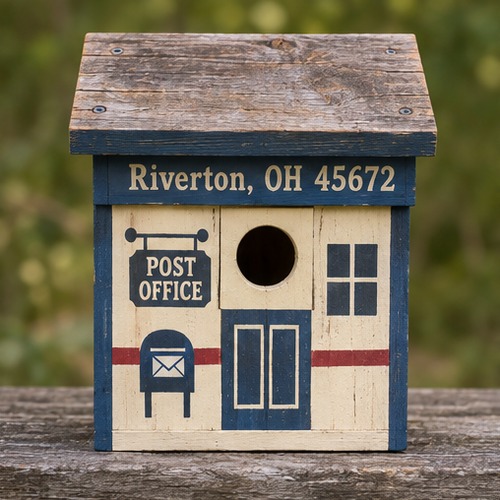
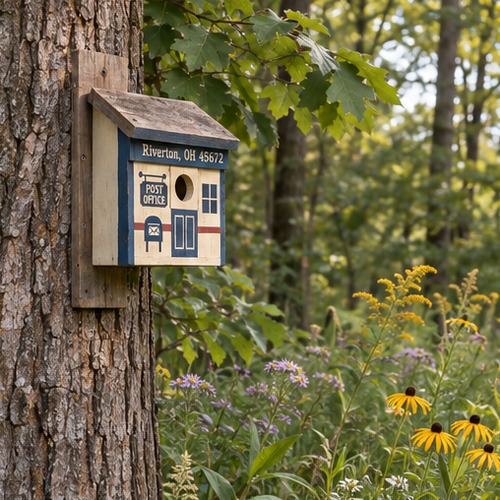
Cream and blue paint turn a small timber front into a neighborhood post office.
The Birdhouse
Letters From Home
Cream and blue paint turn a small timber front into a neighborhood post office. The town and ZIP code across the fascia give it a real destination. It is a design about the address on an envelope as much as the building that once received it.
Stand back until the smaller lettering disappears. The outline and the broad blocks of color still tell you what you are looking at. Move closer and the brushwork and grain become visible. Reclaimed boards bring their own small variations in tone, so two versions of the same design can have a different surface under the paint. Underneath that familiar outline, the form is a cavity nest box intended for the White-breasted Nuthatch.
The Intended Bird
Meet the White-breasted Nuthatch
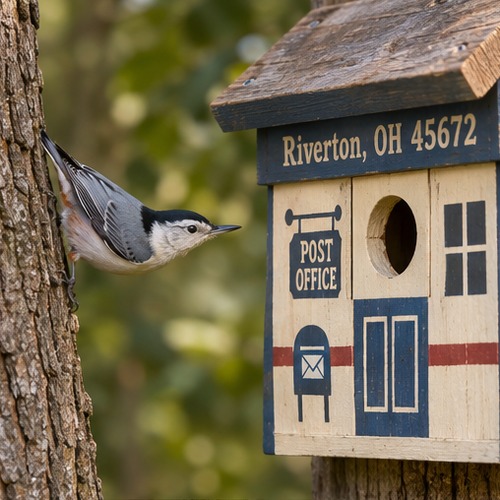
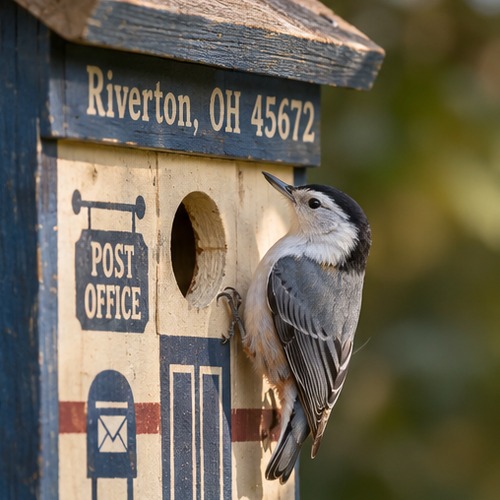
A white face, gray-blue back and dark cap can disappear against mottled bark. A nuthatch frequently works down a trunk headfirst, stopping to pry food from a crevice. A tree cavity provides the starting point for this enclosed design. Nuthatches sometimes use a box where natural cavities are scarce; mature trees remain essential for foraging.
An adult needs to enter with nest material, turn inside and leave again with a clear flight path. That sequence explains the simple face of this design. The paint gives people something to recognize from a distance while the actual chamber gives the bird a sheltered space. When choosing a site, picture the journey from a nearby perch all the way to the opening, including the last few feet.
The Landscape
Range and Nesting Habitat
Where might you see the White-breasted Nuthatch? Across much of the United States and southern Canada wherever sizeable trees provide suitable woodland, including wooded neighborhoods. Look for a settled stand of hardwoods or a wooded edge. Choose an approach sheltered from driving rain, away from a busy feeder and clear of a jumping route for predators.
Check a breeding-season map before choosing a mounting point. A bird seen on a winter walk or during migration may spend the nesting months hundreds of miles away. Look at recent local observations from late spring or summer and compare the habitat around those sightings with your own property. The match becomes more convincing when both the season and the landscape line up.
The Handmade Detail
Which hometown and ZIP should appear?
Remember a first apartment, a family farm or a hometown someone misses. Keep leading zeroes in the ZIP code and confirm the town’s spelling before sending the inscription.
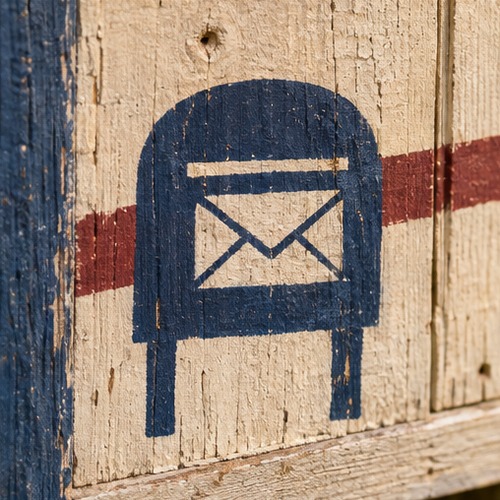
Before settling on the final look of The Corner Post Office, try writing the most important detail on a piece of paper at roughly the size you expect to see. Step back to the distance of your garden chair. Notice what you can still read and which colors disappear against the background. A photograph of the proposed spot helps when discussing the piece with the maker. Allow for differences in the reclaimed boards, especially where a dark grain line crosses a light painted area.
Field Notes
Watching the House Through the Season
Follow one bird down a trunk, across a branch and back to the same patch of bark. Its habit of slipping out of view makes a fixed viewing spot especially rewarding.
Keep a pair of binoculars at the window you use most often. Look first at the approach, then at the house, and finally at the surrounding trees or open ground. This wider view makes it easier to understand where the birds feed and which routes they prefer. It also gives a visitor a chance to inspect the house without a person waiting at the entrance. For The Corner Post Office, plan for an unobstructed view from a comfortable distance and leave the entrance quiet whenever birds are using it. Use the linked NestWatch guide to plan checks appropriate to the White-breasted Nuthatch.