American Kestrel · Reclaimed Wood
The Fire Lookout
The height a kestrel box needs becomes the tower itself.
The Birdhouse
The Lookout Tower
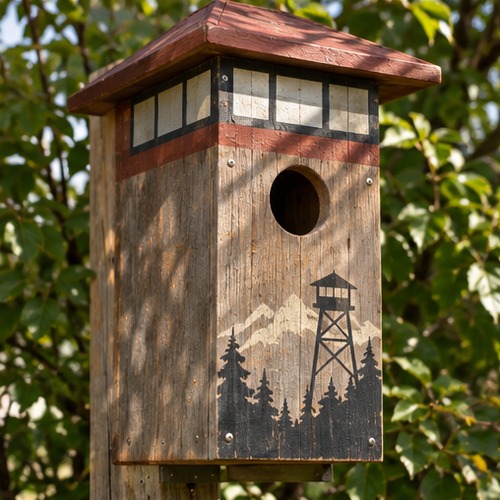
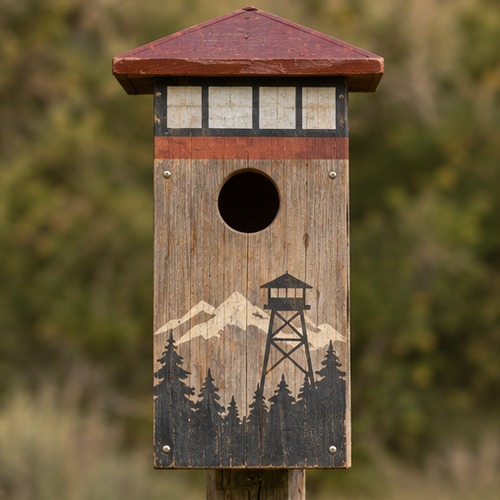
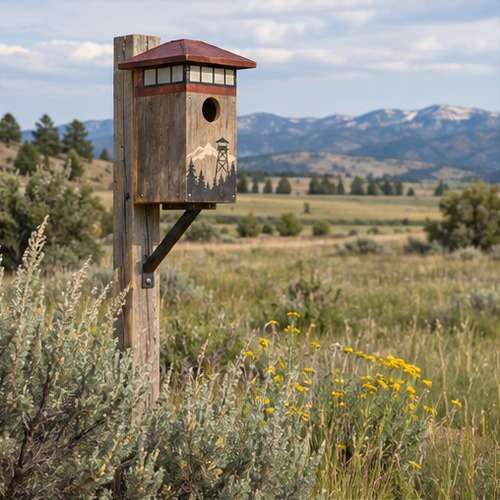
The height a kestrel box needs becomes the tower itself. A band of painted windows just below the roof suggests the lookout room, while the real opening stays obvious and usable. Its proportions carry the idea without a model staircase, railings or spindly support legs.
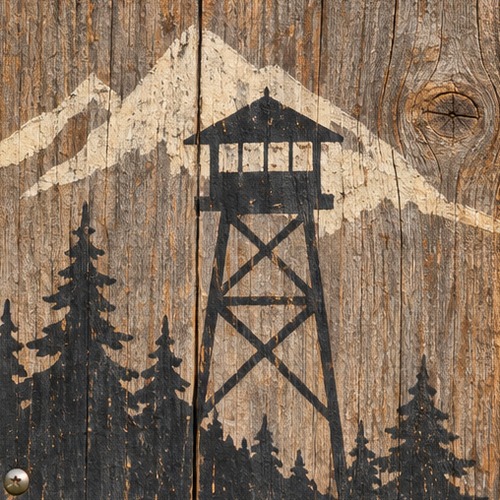
A good test for a themed birdhouse is whether you can describe it to a friend after a glance from across the yard. This one has a clear visual cue, with the finer details left for a closer look. The face of each reclaimed board varies, giving the painted surface a little of the character of the wood beneath it. Underneath that familiar outline, the form is a deep nest box intended for the American Kestrel.
The Intended Bird
Meet the American Kestrel
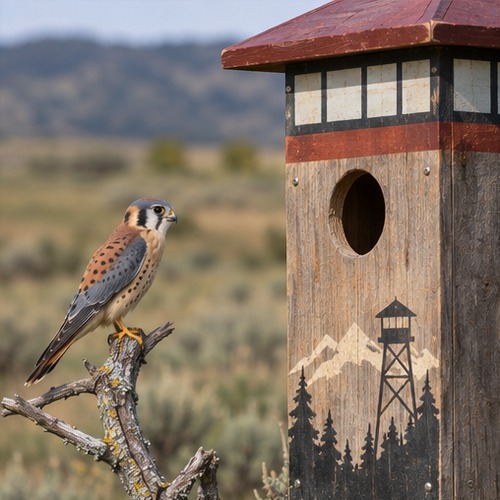
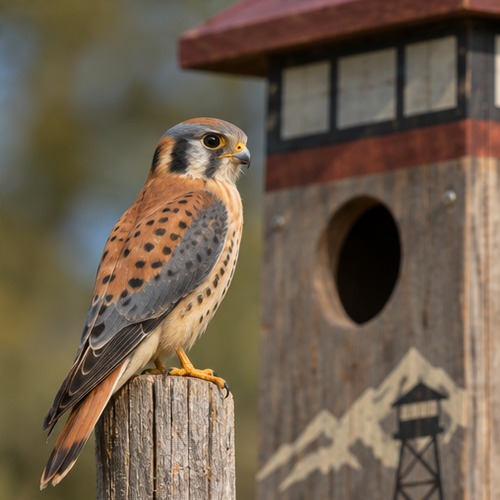
A small falcon on a wire or exposed branch may bob its head or tail before a hunting flight. Look for dark facial stripes and a warm rusty back; males also show blue-gray wings. A kestrel uses a substantial cavity for its eggs. The tall tower form fits a deep chamber, with a much larger opening than a chickadee or bluebird house would need.
Scale is the first thing to consider when choosing this house. A large cavity takes up more space and puts more weight on its support than a small garden nesting box. Ask the maker about the final dimensions, the entry shape and access for seasonal care. Those decisions have a direct bearing on where the house can be installed and whether the person who tends it can reach it safely.
The Landscape
Range and Nesting Habitat
Where might you see the American Kestrel? Widely distributed across the Americas. In North America it favors open country, from farmland to grasslands, where hunting space and a usable cavity occur together. Think in terms of fields, pastures or meadows with hunting perches and a safe approach. Plan for the weight and height of the box with an experienced installer or local nest-box program.
Read the range map at two scales. First check whether your part of the country supports breeding birds. Then look at the few hundred yards around the proposed location. Local vegetation, water, elevation and neighboring land can change the answer even within one ZIP code. The linked species account is a starting point for comparing your yard with places where the bird actually nests.
The Handmade Detail
Which view deserves a lookout?
Think about open land with room to hunt before deciding where a tower would look best. A kestrel box is a substantial installation, so discuss the finished size and mounting plan with the maker.
For a gift, a short note explaining why you chose The Fire Lookout can be as meaningful as the house itself. Include the place, person or small memory that makes the design familiar. If you have a particular painted detail in mind, share it with the maker before ordering and ask how it will read at the finished size. Reclaimed boards have individual markings; the illustration shows the design direction, while the real piece will carry the grain of the timber selected for it.
Field Notes
Watching the House Through the Season
A small falcon hovering over grass may be tracking prey well away from its nest. Watch where it returns after a hunting flight and avoid drawing attention to an active nesting cavity.
Keep a pair of binoculars at the window you use most often. Look first at the approach, then at the house, and finally at the surrounding trees or open ground. This wider view makes it easier to understand where the birds feed and which routes they prefer. It also gives a visitor a chance to inspect the house without a person waiting at the entrance. For The Fire Lookout, plan for an unobstructed view from a comfortable distance and leave the entrance quiet whenever birds are using it. Use the linked NestWatch guide to plan checks appropriate to the American Kestrel.