Carolina Chickadee · Reclaimed Wood
The Ham Shack
The personality of a radio shack often comes down to the call letters over the door.
The Birdhouse
On the Air
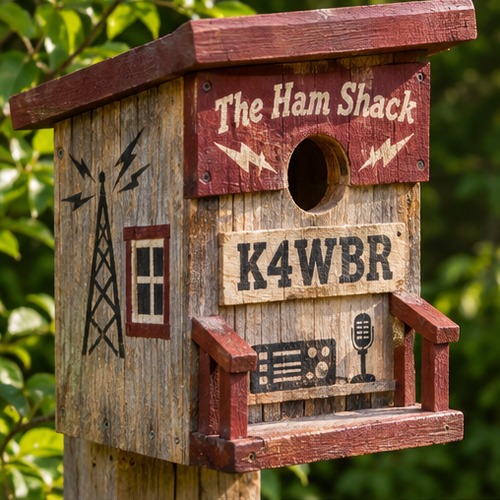
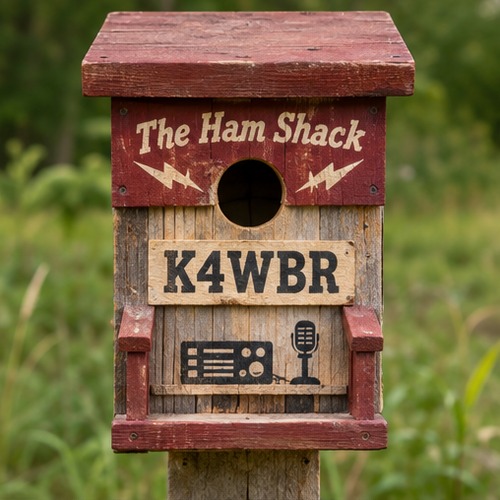
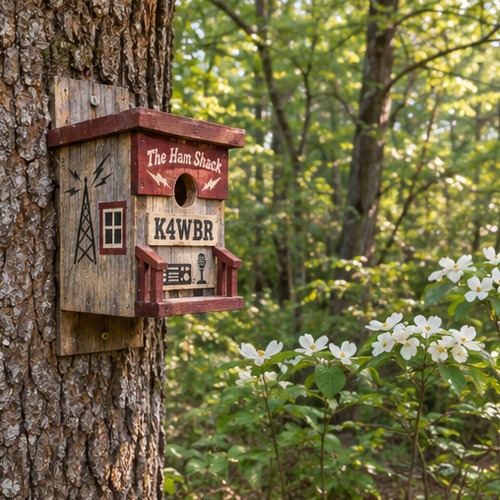
The personality of a radio shack often comes down to the call letters over the door. Here the front of a compact timber cabin leaves enough room for that identity to show across a garden. The simple silhouette recalls a place where someone could spend a whole evening listening.
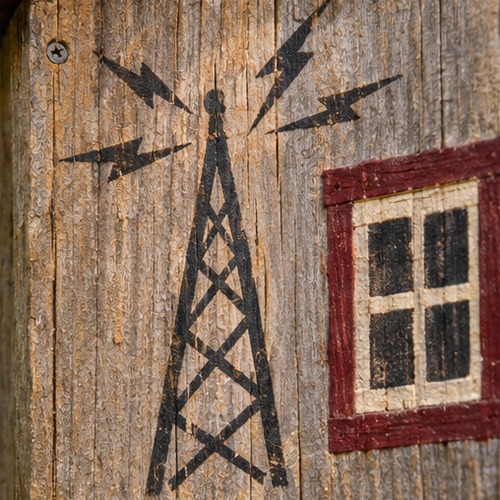
Stand back until the smaller lettering disappears. The outline and the broad blocks of color still tell you what you are looking at. Move closer and the brushwork and grain become visible. Reclaimed boards bring their own small variations in tone, so two versions of the same design can have a different surface under the paint. Underneath that familiar outline, the form is a cavity nest box intended for the Carolina Chickadee.
The Intended Bird
Meet the Carolina Chickadee
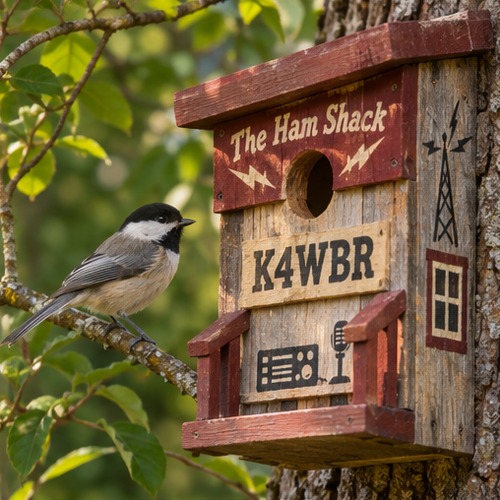
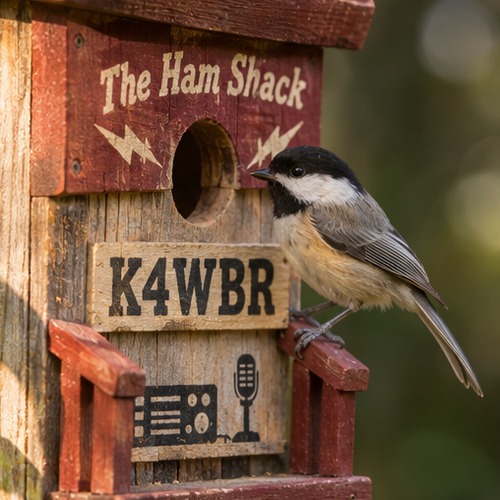
Look for a small black-capped bird with white cheeks and a dark bib inspecting the ends of leafy twigs. Its quick movements and voice are often easier to pick up than subtle plumage differences. A compact cavity suits a small woodland bird that carries moss and soft lining into the nest. An unobstructed entrance matters more to the bird than the lettering or artwork outside.
An adult needs to enter with nest material, turn inside and leave again with a clear flight path. That sequence explains the simple face of this design. The paint gives people something to recognize from a distance while the actual chamber gives the bird a sheltered space. When choosing a site, picture the journey from a nearby perch all the way to the opening, including the last few feet.
The Landscape
Range and Nesting Habitat
Where might you see the Carolina Chickadee? Primarily the southeastern United States, extending west into parts of Texas and north to a shifting contact zone with the Black-capped Chickadee. Favor a yard with mature deciduous trees or a woodland edge. An exposed fence in the middle of an open lawn offers little of the leafy foraging space chickadees use.
Check a breeding-season map before choosing a mounting point. A bird seen on a winter walk or during migration may spend the nesting months hundreds of miles away. Look at recent local observations from late spring or summer and compare the habitat around those sightings with your own property. The match becomes more convincing when both the season and the landscape line up.
The Handmade Detail
What call sign should the cabin carry?
Use the operator’s exact call sign, including its numeral. Compare uppercase letters such as O with zero before sharing the inscription, particularly if the house is a surprise for another operator.
Before settling on the final look of The Ham Shack, try writing the most important detail on a piece of paper at roughly the size you expect to see. Step back to the distance of your garden chair. Notice what you can still read and which colors disappear against the background. A photograph of the proposed spot helps when discussing the piece with the maker. Allow for differences in the reclaimed boards, especially where a dark grain line crosses a light painted area.
Field Notes
Watching the House Through the Season
Listen for chickadee calls and watch a flock work from tree to tree. In areas where both chickadees meet, use range, voice and local records together before naming a distant visitor.
A notebook can be as useful as a camera. Sketch the route from a favorite perch, record whether one bird or two appeared, and note the first day you saw nesting material. These details are easy to miss when trying to fill the frame. Compare the notes later with the nesting calendar for your own area. For The Ham Shack, plan for an unobstructed view from a comfortable distance and leave the entrance quiet whenever birds are using it. Use the linked NestWatch guide to plan checks appropriate to the Carolina Chickadee.