Violet-green Swallow · Reclaimed Wood
The Harbor Master
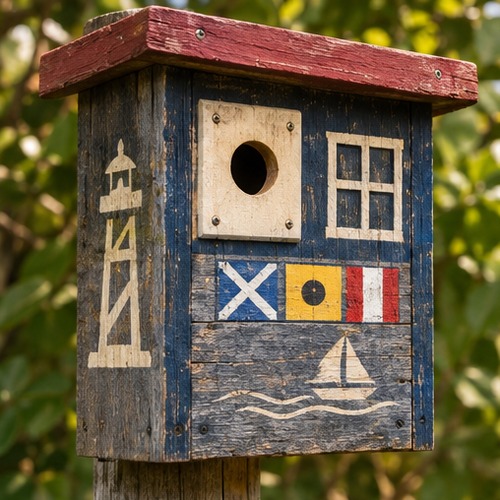
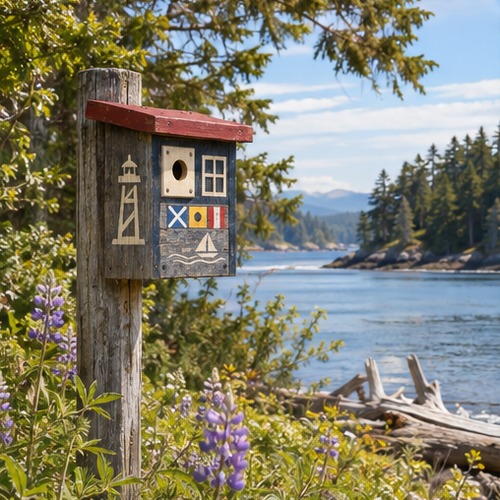
A compact harbor office uses painted signal flags to carry initials.
The Birdhouse
Signals at the Harbor
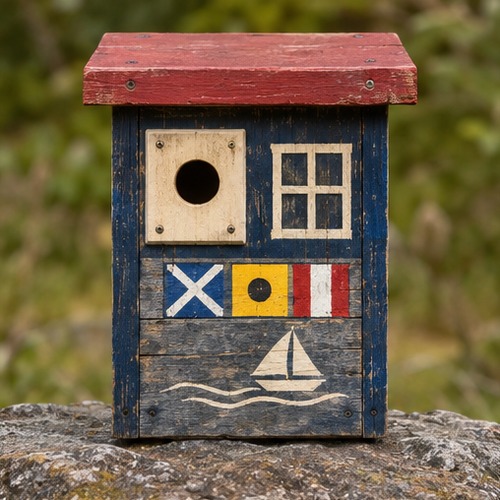
A compact harbor office uses painted signal flags to carry initials. Each flag reads as a block of color from a distance and becomes a letter when someone knows the code. The nautical character comes from paint rather than dangling lines or miniature rigging.
Imagine seeing it first from a kitchen window, then from a few steps away. At the window it is the outline you notice. Up close, the painted detail catches the eye and the grain shows why the same pattern can look a little different on each piece of reclaimed wood. Both views are part of the character of a handmade house. Underneath that familiar outline, the form is a cavity nest box intended for the Violet-green Swallow.
The Intended Bird
Meet the Violet-green Swallow
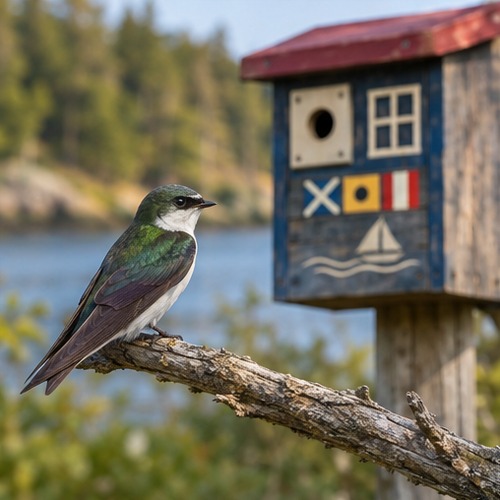
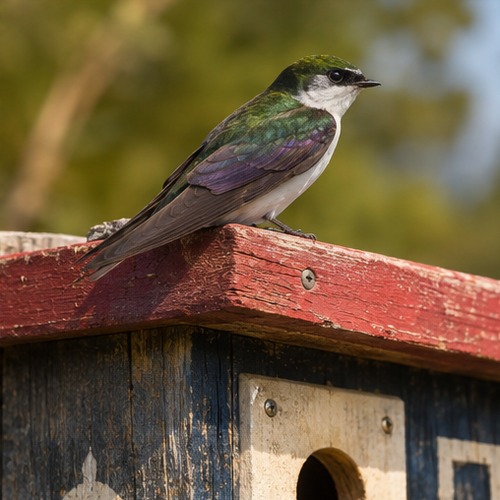
Sunlight brings out a green back and violet rump. White sweeping onto the sides of the rump and around the face helps distinguish this swallow from the Tree Swallows that may feed nearby. A cavity can serve a species that also uses holes in trees and crevices in cliffs. It needs clear aerial access, even when the house is styled to look like a compact harbor office.
An adult needs to enter with nest material, turn inside and leave again with a clear flight path. That sequence explains the simple face of this design. The paint gives people something to recognize from a distance while the actual chamber gives the bird a sheltered space. When choosing a site, picture the journey from a nearby perch all the way to the opening, including the last few feet.
The Landscape
Range and Nesting Habitat
Where might you see the Violet-green Swallow? Across western North America in the breeding season, including wooded mountain valleys and western river country. Many winter in Mexico and Central America. Look for open woodland or a wooded canyon close to good feeding airspace. A nautical theme works in a yard many miles from the ocean if the local habitat and breeding range fit.
The useful question is where this bird spends its nesting season. A dot on a year-round sightings map could represent a migrant stopping for a day. Compare the breeding range with summer observations from a nearby park or natural area. Then walk your own grounds and look for the same pattern of food, cover and open approach before selecting the final spot.

The Handmade Detail
Which initials should the flags spell?
Write down the initials in order before choosing the signal sequence. For a sailor, the pleasure is partly in being able to read the dedication without any ordinary lettering on the front.
When discussing The Harbor Master with the workshop, describe the part of the design that first caught your eye. A quick sketch or a reference photograph can say more than a long list of changes. Think about how the piece will look in summer leaves as well as against bare branches. The grain of reclaimed wood varies from board to board, so a painted line can pick up a different texture on the finished house. Keep the entrance, the roof edge and access for seasonal care clear of any requested embellishment.
Field Notes
Watching the House Through the Season
Watch groups feeding above water and look for pale patches as they turn. A bird perched farther away in steady light can be easier to identify than one darting inches above a stream.
Try making a small field note after each visit. Write down the time, the weather and what the visitor actually did. A bird resting on the roof, a bird entering once and a pair making repeated trips with food are three different observations. After a few weeks those modest notes often tell a better story than one dramatic photograph. For The Harbor Master, plan for an unobstructed view from a comfortable distance and leave the entrance quiet whenever birds are using it. Use the linked NestWatch guide to plan checks appropriate to the Violet-green Swallow.