Eastern Screech-Owl · Reclaimed Wood
The Night Watch
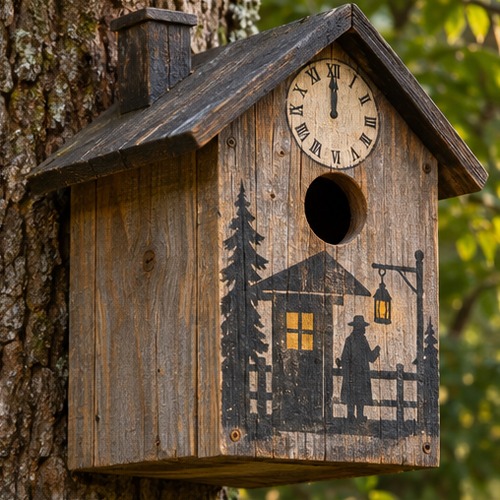
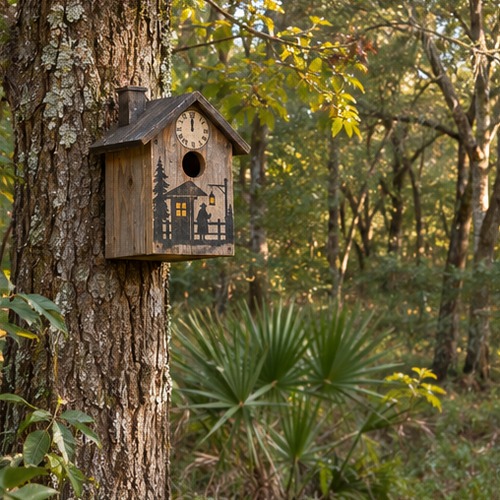
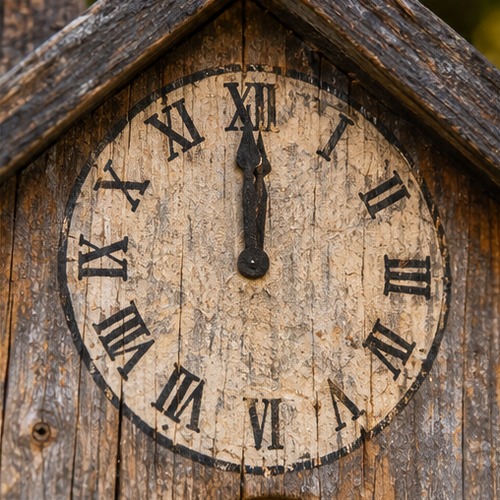
A painted clock stays at midnight above the old watchman’s cabin.
The Birdhouse
Midnight at the Watch Cabin
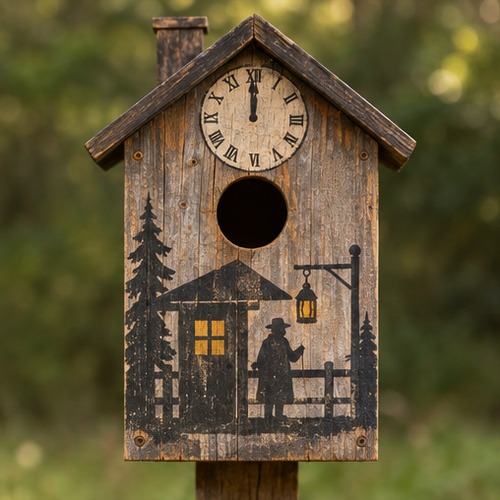
A painted clock stays at midnight above the old watchman’s cabin. The circular face echoes the much larger opening an owl needs. In dappled woodland light the clock gives a human observer a point to find again when the rest of the house blends into bark.
Stand back until the smaller lettering disappears. The outline and the broad blocks of color still tell you what you are looking at. Move closer and the brushwork and grain become visible. Reclaimed boards bring their own small variations in tone, so two versions of the same design can have a different surface under the paint. Underneath that familiar outline, the form is a deep nest box intended for the Eastern Screech-Owl.
The Intended Bird
Meet the Eastern Screech-Owl
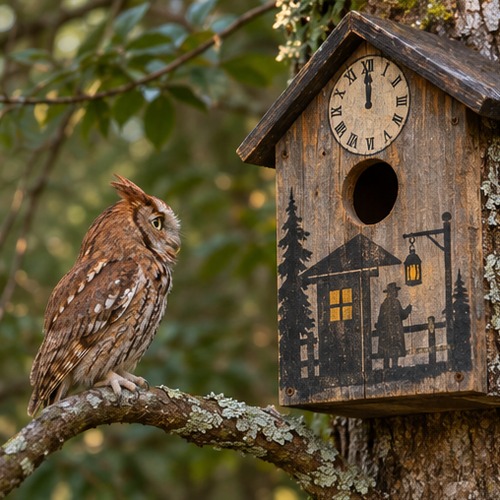
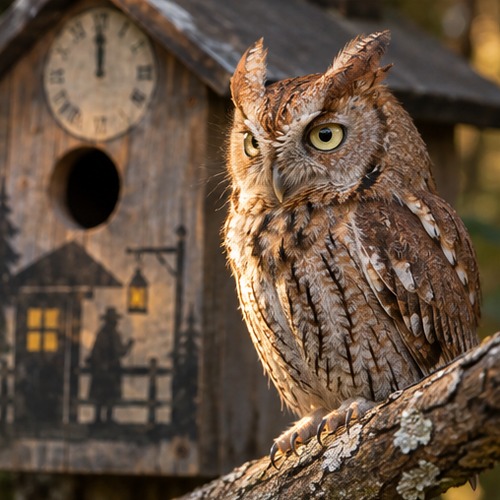
This small owl may be gray or reddish, with finely patterned plumage that blends into bark. Its descending whinny and steady trill are useful clues after dusk. A substantial tree cavity serves as both shelter and a nesting site. A roomy owl box follows that pattern; a small songbird chamber or miniature decorative opening would be unsuitable.
Scale is the first thing to consider when choosing this house. A large cavity takes up more space and puts more weight on its support than a small garden nesting box. Ask the maker about the final dimensions, the entry shape and access for seasonal care. Those decisions have a direct bearing on where the house can be installed and whether the person who tends it can reach it safely.
The Landscape
Range and Nesting Habitat
Where might you see the Eastern Screech-Owl? Across much of eastern North America in woodlands, wooded neighborhoods and parks, from southern Canada into parts of Mexico. A quiet wooded edge with mature trees offers cover. Choose the installation with the owl’s flight route and the weight of the box in mind, well away from busy paths and night lighting.
Check a breeding-season map before choosing a mounting point. A bird seen on a winter walk or during migration may spend the nesting months hundreds of miles away. Look at recent local observations from late spring or summer and compare the habitat around those sightings with your own property. The match becomes more convincing when both the season and the landscape line up.
The Handmade Detail
Where would you listen for the night shift?
Choose a place where you can enjoy the cabin from a window or a quiet seat at dusk. The best viewing arrangement lets the owl come and go in darkness without drawing people close to the opening.
Before settling on the final look of The Night Watch, try writing the most important detail on a piece of paper at roughly the size you expect to see. Step back to the distance of your garden chair. Notice what you can still read and which colors disappear against the background. A photograph of the proposed spot helps when discussing the piece with the maker. Allow for differences in the reclaimed boards, especially where a dark grain line crosses a light painted area.
Field Notes
Watching the House Through the Season
Listen at dusk from a fixed spot instead of shining a light into the opening. An owl may sit completely still in shadow, so sound can be a more satisfying clue than a close photograph.
Try making a small field note after each visit. Write down the time, the weather and what the visitor actually did. A bird resting on the roof, a bird entering once and a pair making repeated trips with food are three different observations. After a few weeks those modest notes often tell a better story than one dramatic photograph. For The Night Watch, plan for an unobstructed view from a comfortable distance and leave the entrance quiet whenever birds are using it. Use the linked NestWatch guide to plan checks appropriate to the Eastern Screech-Owl.