Black-capped Chickadee · Reclaimed Wood
The One-Room Schoolhouse
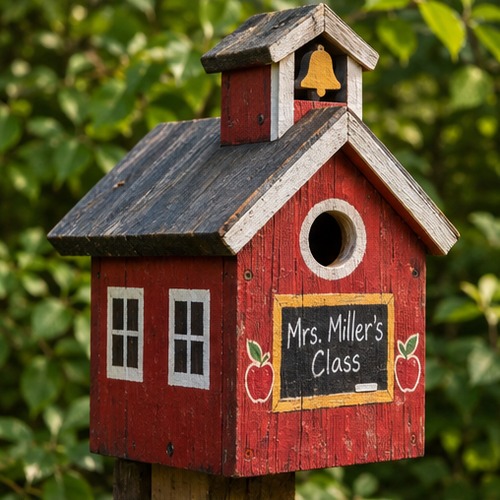
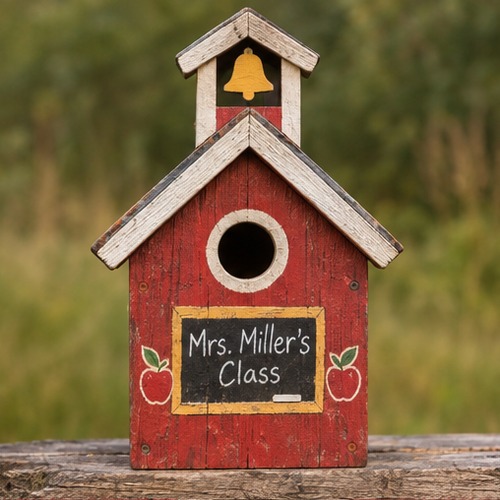
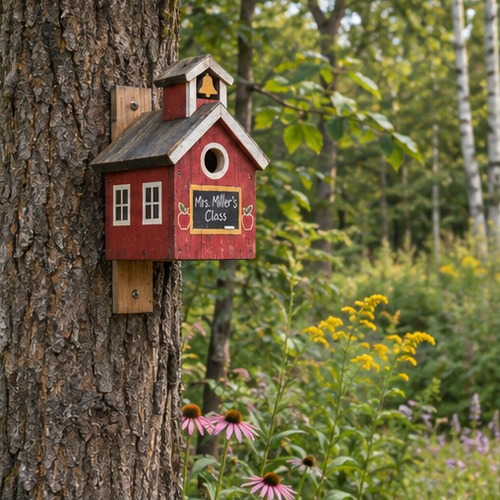
The red schoolhouse sets off a single dark painted blackboard.
The Birdhouse
Class Is in Session
The red schoolhouse sets off a single dark painted blackboard. The board is where a teacher’s name or classroom dedication belongs. It recalls a place by way of the person who taught there, without relying on tiny desks or a bell that swings in the wind.
A good test for a themed birdhouse is whether you can describe it to a friend after a glance from across the yard. This one has a clear visual cue, with the finer details left for a closer look. The face of each reclaimed board varies, giving the painted surface a little of the character of the wood beneath it. Underneath that familiar outline, the form is a cavity nest box intended for the Black-capped Chickadee.
The Intended Bird
Meet the Black-capped Chickadee
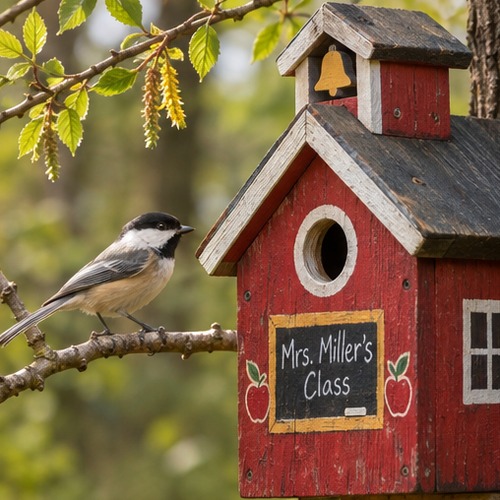
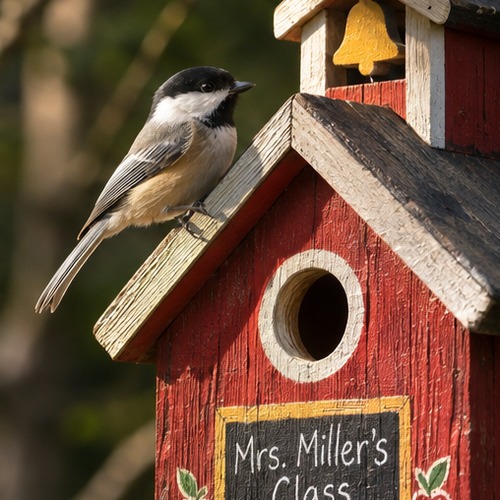
A black cap and bib frame broad white cheeks. Chickadees inspect buds, bark and small branches with quick movements, often hanging beneath a twig to reach the other side. A small cavity offers a sheltered place for a moss-based nest. In nature the birds may excavate soft, decayed wood, so an old tree with natural cavities remains valuable beside a nest box.
An adult needs to enter with nest material, turn inside and leave again with a clear flight path. That sequence explains the simple face of this design. The paint gives people something to recognize from a distance while the actual chamber gives the bird a sheltered space. When choosing a site, picture the journey from a nearby perch all the way to the opening, including the last few feet.
The Landscape
Range and Nesting Habitat
Where might you see the Black-capped Chickadee? Across southern Canada and much of the northern United States, extending south in some mountain regions. Local records help near the boundary with Carolina Chickadees. Look for mixed woodland, mature deciduous trees or a yard bordering a woodlot. Avoid an exposed site with little foliage or a mounting point directly over a frequently used walkway.
Read the range map at two scales. First check whether your part of the country supports breeding birds. Then look at the few hundred yards around the proposed location. Local vegetation, water, elevation and neighboring land can change the answer even within one ZIP code. The linked species account is a starting point for comparing your yard with places where the bird actually nests.
The Handmade Detail
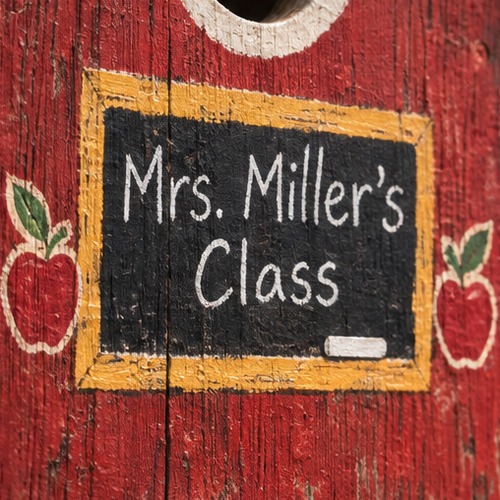
Whose class is on the blackboard?
Check spelling, preferred title and the exact classroom wording with someone who knows the teacher. A brief dedication leaves the lettering large enough to recognize from a kitchen window.
For a gift, a short note explaining why you chose The One-Room Schoolhouse can be as meaningful as the house itself. Include the place, person or small memory that makes the design familiar. If you have a particular painted detail in mind, share it with the maker before ordering and ask how it will read at the finished size. Reclaimed boards have individual markings; the illustration shows the design direction, while the real piece will carry the grain of the timber selected for it.
Field Notes
Watching the House Through the Season
The familiar calls make an excellent starting point, but listen for changes in activity during nesting season. A bird carrying moss may slip quietly away from the noisier birds at a feeder.
Try making a small field note after each visit. Write down the time, the weather and what the visitor actually did. A bird resting on the roof, a bird entering once and a pair making repeated trips with food are three different observations. After a few weeks those modest notes often tell a better story than one dramatic photograph. For The One-Room Schoolhouse, plan for an unobstructed view from a comfortable distance and leave the entrance quiet whenever birds are using it. Use the linked NestWatch guide to plan checks appropriate to the Black-capped Chickadee.