Barn Swallow · Reclaimed Wood
The Opry Stage
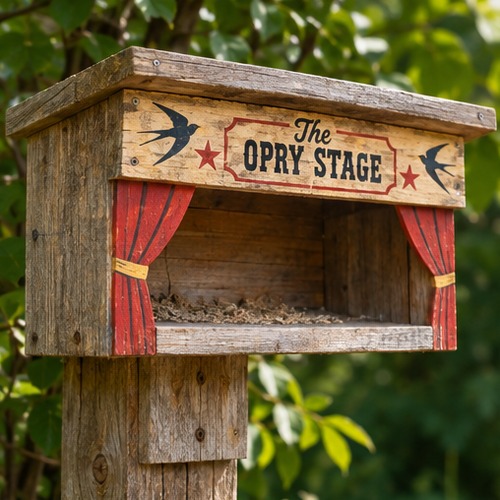
Red curtains painted down the sides define an open stage.

The Birdhouse
On the Opry Stage
Red curtains painted down the sides define an open stage. The showbill goes on the fascia above, leaving the ledge beneath available for a swallow’s own mud cup. The contrast between that earthy nest and the painted theater is part of the appeal.
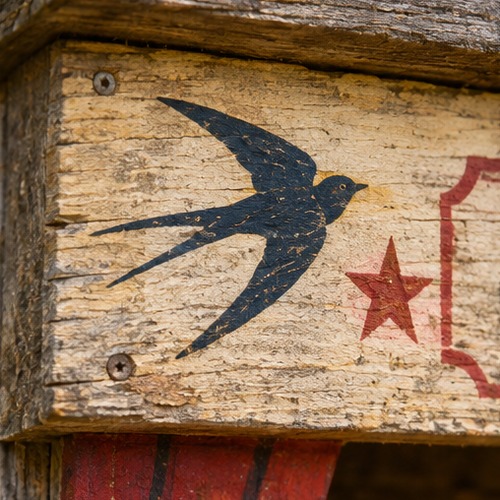
Stand back until the smaller lettering disappears. The outline and the broad blocks of color still tell you what you are looking at. Move closer and the brushwork and grain become visible. Reclaimed boards bring their own small variations in tone, so two versions of the same design can have a different surface under the paint. Underneath that familiar outline, the form is a covered nesting shelf intended for the Barn Swallow.
The Intended Bird
Meet the Barn Swallow
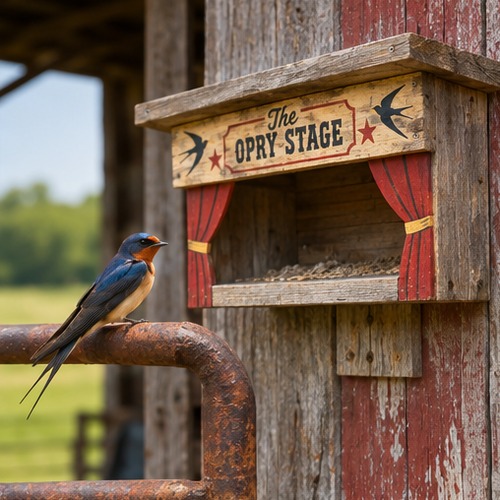
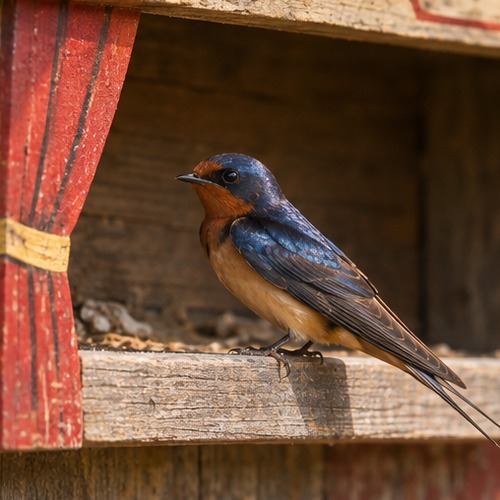
Look for a deeply forked tail in adults, glossy dark upperparts and a rusty throat. Low sweeps over fields and water let the bird catch insects without landing. A sheltered support gives the swallow a starting place for its mud cup. The open front leaves room for its approach; a closed songbird box cannot serve the same purpose.
Look at the front of the house and imagine an adult arriving with its bill full. The broad opening lets it fly directly to the nesting surface, turn and leave without squeezing past a door. The sides give the ledge definition while the overhead cover protects the place where the bird attaches its own nest. The nest material comes later, carried in by the birds themselves.
The Landscape
Range and Nesting Habitat
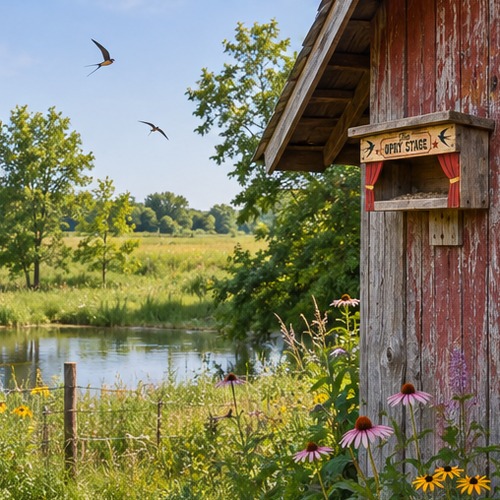
Where might you see the Barn Swallow? Across much of North America in the breeding season, migrating to warmer regions of the Americas when insects become scarce. Think of an accessible eave, open shed or covered structure near open feeding country. The approach must stay available throughout nesting, including when doors are shut or equipment is stored.
Check a breeding-season map before choosing a mounting point. A bird seen on a winter walk or during migration may spend the nesting months hundreds of miles away. Look at recent local observations from late spring or summer and compare the habitat around those sightings with your own property. The match becomes more convincing when both the season and the landscape line up.
The Handmade Detail
Who is on the showbill?
Pick a performer’s name or a short concert title. A sheltered site that swallows can reach throughout the season gives the stage a practical purpose beyond its place in a music lover’s garden.
Before settling on the final look of The Opry Stage, try writing the most important detail on a piece of paper at roughly the size you expect to see. Step back to the distance of your garden chair. Notice what you can still read and which colors disappear against the background. A photograph of the proposed spot helps when discussing the piece with the maker. Allow for differences in the reclaimed boards, especially where a dark grain line crosses a light painted area.
Field Notes
Watching the House Through the Season
Watch how swallows bank on the return flight. A pair carrying small amounts of mud to the same sheltered spot can reveal the early stages of a nest without any need to approach it.
Choose a seat from which you can see the entrance without standing in front of it. A few quiet minutes in the morning and another look toward evening can reveal different parts of the bird’s routine. If an adult waits with food or calls repeatedly while you are nearby, move farther away and let it resume its visits. For The Opry Stage, plan for an unobstructed view from a comfortable distance and leave the entrance quiet whenever birds are using it. Use the linked NestWatch guide to plan checks appropriate to the Barn Swallow.