Tufted Titmouse · Reclaimed Wood
The Volunteer Library
A small-town library takes shape in painted brickwork on reclaimed timber.
The Birdhouse
Books Through the Return Slot
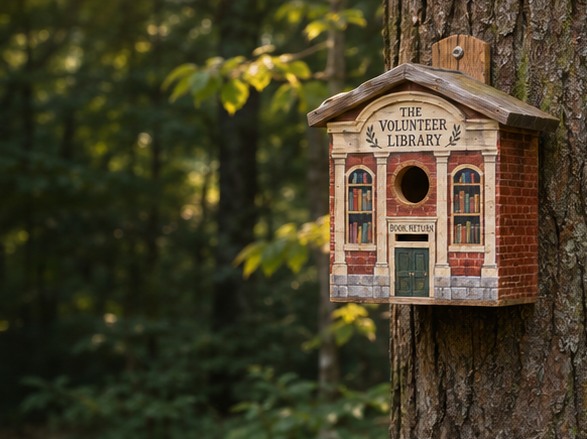
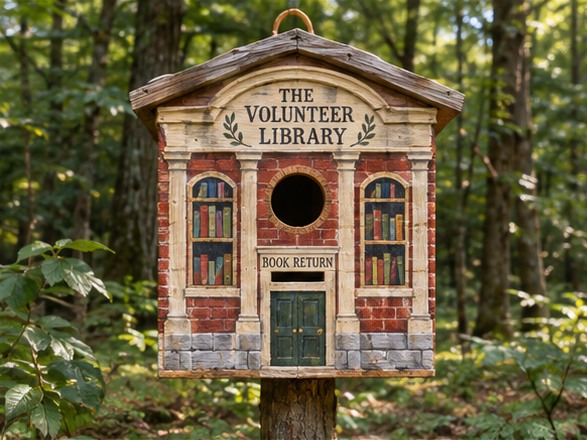
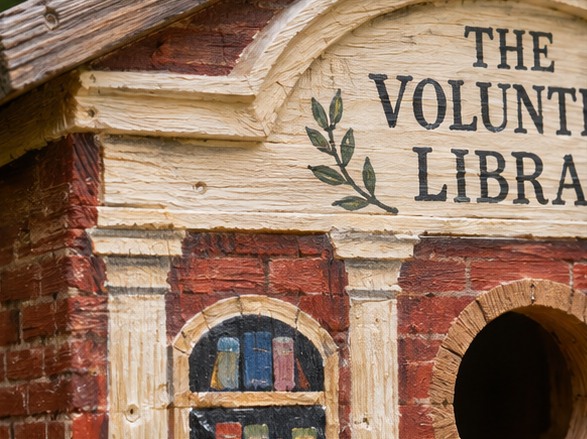
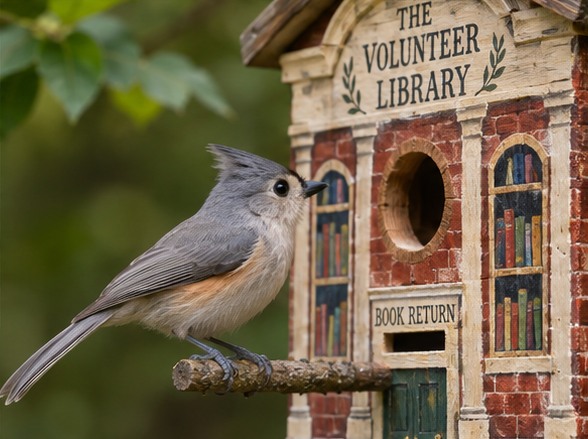
A small-town library takes shape in painted brickwork on reclaimed timber. The arched pediment frames the real entrance and a book return is painted lower down. Look closely and the lines of the original board run straight through the painted courses of brick.
A good test for a themed birdhouse is whether you can describe it to a friend after a glance from across the yard. This one has a clear visual cue, with the finer details left for a closer look. The face of each reclaimed board varies, giving the painted surface a little of the character of the wood beneath it. Underneath that familiar outline, the form is a cavity nest box intended for the Tufted Titmouse.
The Intended Bird
Meet the Tufted Titmouse
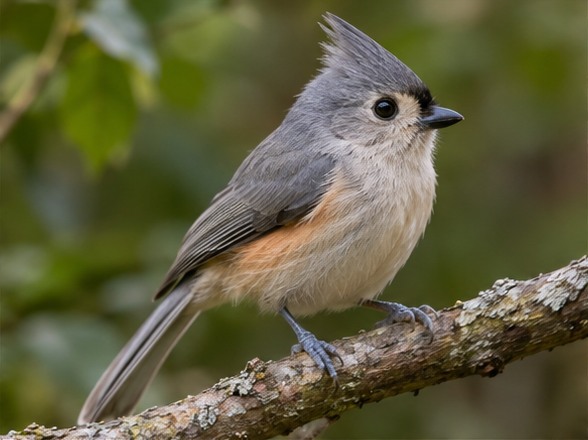
Look for a small pointed gray crest, black forehead and large dark eyes. A tufted titmouse may carry a seed to a branch, hold it between its feet and work at it with its bill. A titmouse uses existing holes for nesting, including older woodpecker cavities. The nest can include moss, bark, leaves and soft lining carried through the entrance a little at a time.
An adult needs to enter with nest material, turn inside and leave again with a clear flight path. That sequence explains the simple face of this design. The paint gives people something to recognize from a distance while the actual chamber gives the bird a sheltered space. When choosing a site, picture the journey from a nearby perch all the way to the opening, including the last few feet.
The Landscape
Range and Nesting Habitat
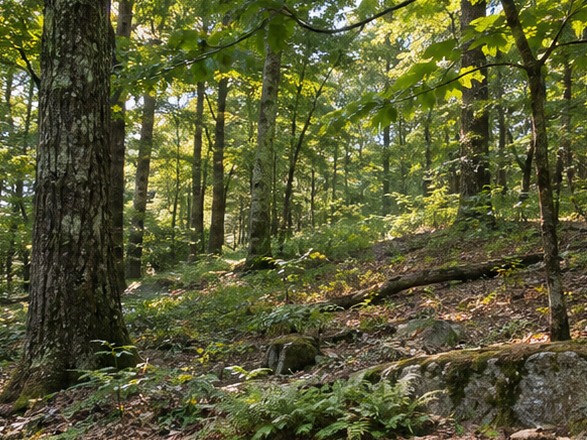
Where might you see the Tufted Titmouse? Across much of the eastern United States, especially in deciduous woodland, wooded suburbs and parks with mature trees. A wooded neighborhood with mature trees supplies cover and feeding opportunities. Give the opening protection from driving rain and keep access clear for both the birds and later maintenance.
Read the range map at two scales. First check whether your part of the country supports breeding birds. Then look at the few hundred yards around the proposed location. Local vegetation, water, elevation and neighboring land can change the answer even within one ZIP code. The linked species account is a starting point for comparing your yard with places where the bird actually nests.
The Handmade Detail
Whose Name Is Above the Door?
Honor a librarian, a reading room or the town that gave you your first library card. The panel over the entrance suits a surname or a short place name. A dedication date can sit beneath the painted return slot.
For a gift, a short note explaining why you chose The Volunteer Library can be as meaningful as the house itself. Include the place, person or small memory that makes the design familiar. If you have a particular painted detail in mind, share it with the maker before ordering and ask how it will read at the finished size. Reclaimed boards have individual markings; the illustration shows the design direction, while the real piece will carry the grain of the timber selected for it.
Field Notes
Watching the House Through the Season
Its ringing whistles can carry farther than its small silhouette suggests. Listen before looking, then follow movement in the middle canopy until the crest comes into view.
Keep a pair of binoculars at the window you use most often. Look first at the approach, then at the house, and finally at the surrounding trees or open ground. This wider view makes it easier to understand where the birds feed and which routes they prefer. It also gives a visitor a chance to inspect the house without a person waiting at the entrance. For The Volunteer Library, plan for an unobstructed view from a comfortable distance and leave the entrance quiet whenever birds are using it. Use the linked NestWatch guide to plan checks appropriate to the Tufted Titmouse.