Mountain Chickadee · Reclaimed Wood
Trailhead Ranger Station
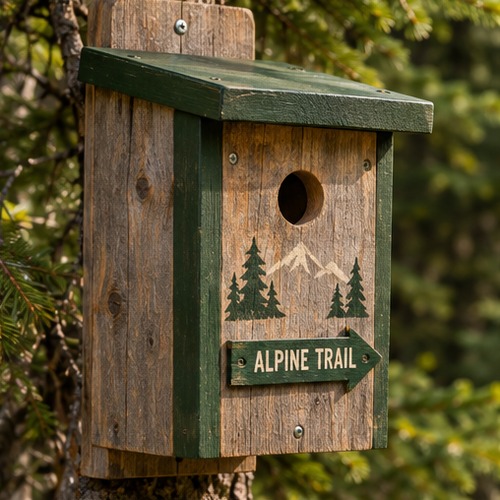
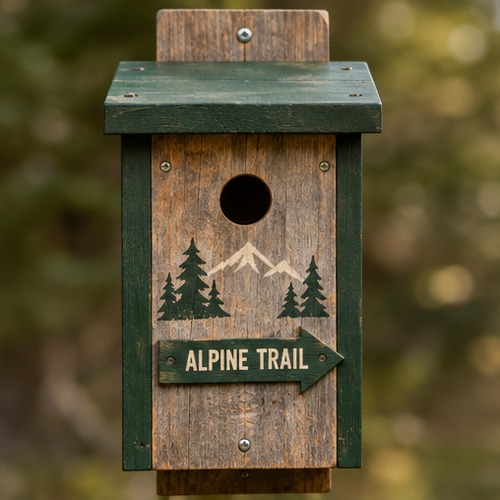
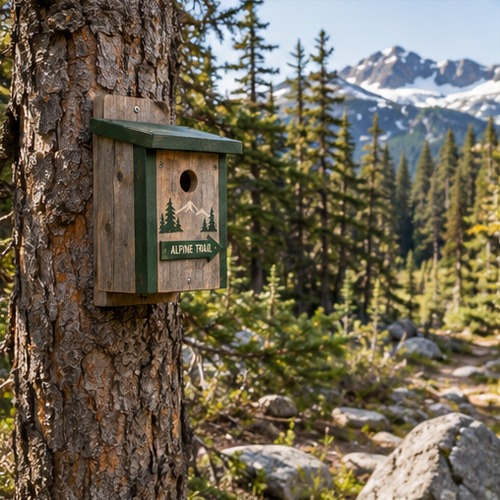
Forest-green trim frames the face of a ranger station.
The Birdhouse
A Sign at the Trailhead
Forest-green trim frames the face of a ranger station. A single arrow-shaped trail sign turns that familiar building into a trailhead and gives the design a clear direction. The arrow is a piece of storytelling that works even before you are close enough to read the trail name.
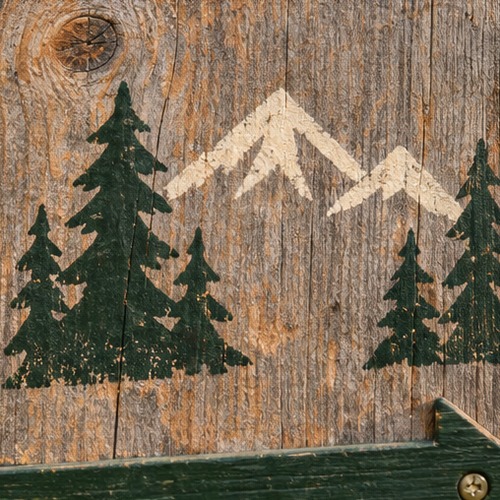
Stand back until the smaller lettering disappears. The outline and the broad blocks of color still tell you what you are looking at. Move closer and the brushwork and grain become visible. Reclaimed boards bring their own small variations in tone, so two versions of the same design can have a different surface under the paint. Underneath that familiar outline, the form is a cavity nest box intended for the Mountain Chickadee.
The Intended Bird
Meet the Mountain Chickadee
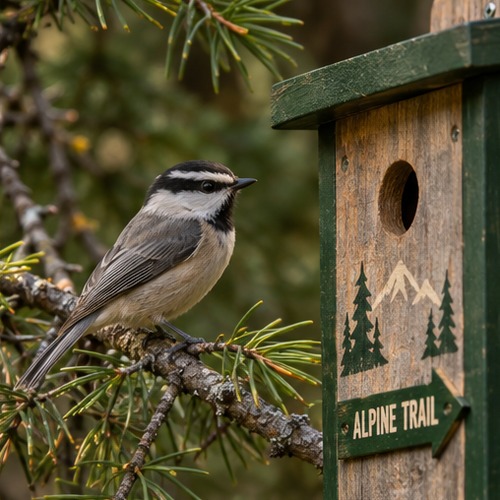
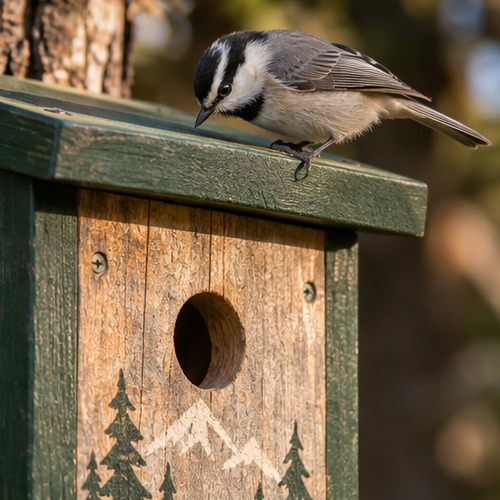
The slender white eyebrow passing through the black cap is the field mark to look for. Watch small groups work among evergreen needles and cones, sometimes hanging upside down to reach a crevice. The enclosed chamber reflects the natural openings these chickadees use in mountain forests. The opening needs to remain clear even when the outside carries a trail sign or painted trim.
An adult needs to enter with nest material, turn inside and leave again with a clear flight path. That sequence explains the simple face of this design. The paint gives people something to recognize from a distance while the actual chamber gives the bird a sheltered space. When choosing a site, picture the journey from a nearby perch all the way to the opening, including the last few feet.
The Landscape
Range and Nesting Habitat
Where might you see the Mountain Chickadee? In mountain forests of western North America, including the Rockies, Sierra Nevada and other western ranges. Elevation and the local tree community matter. A stand of conifers bordering a clearing is a better starting point than an open suburban lawn. Check for local breeding records at your elevation and choose shelter from prevailing wind.
Check a breeding-season map before choosing a mounting point. A bird seen on a winter walk or during migration may spend the nesting months hundreds of miles away. Look at recent local observations from late spring or summer and compare the habitat around those sightings with your own property. The match becomes more convincing when both the season and the landscape line up.
The Handmade Detail
Where should the trail arrow point?
Choose the route you return to each autumn, the family’s first long hike or a short local trail with a good view. A recognizable trail nickname can be easier to read among dark needles than a long formal title.
Before settling on the final look of Trailhead Ranger Station, try writing the most important detail on a piece of paper at roughly the size you expect to see. Step back to the distance of your garden chair. Notice what you can still read and which colors disappear against the background. A photograph of the proposed spot helps when discussing the piece with the maker. Allow for differences in the reclaimed boards, especially where a dark grain line crosses a light painted area.
Field Notes
Watching the House Through the Season
Pick a fixed branch near the outer edge of a pine. A bird working toward the tip often gives a clearer side view of the eyebrow than a bird seen head-on against the sky.
Keep a pair of binoculars at the window you use most often. Look first at the approach, then at the house, and finally at the surrounding trees or open ground. This wider view makes it easier to understand where the birds feed and which routes they prefer. It also gives a visitor a chance to inspect the house without a person waiting at the entrance. For Trailhead Ranger Station, plan for an unobstructed view from a comfortable distance and leave the entrance quiet whenever birds are using it. Use the linked NestWatch guide to plan checks appropriate to the Mountain Chickadee.